The Fall Reset
Six things your garden needs before the ground closes.
As an Amazon Associate, myGardenHQ earns from qualifying purchases. Seeds Now links are also affiliate links; myGardenHQ may earn a commission at no cost to you.
What to plant in October
FROM MY GARDEN
WHAT THE APP DOES WITH IT
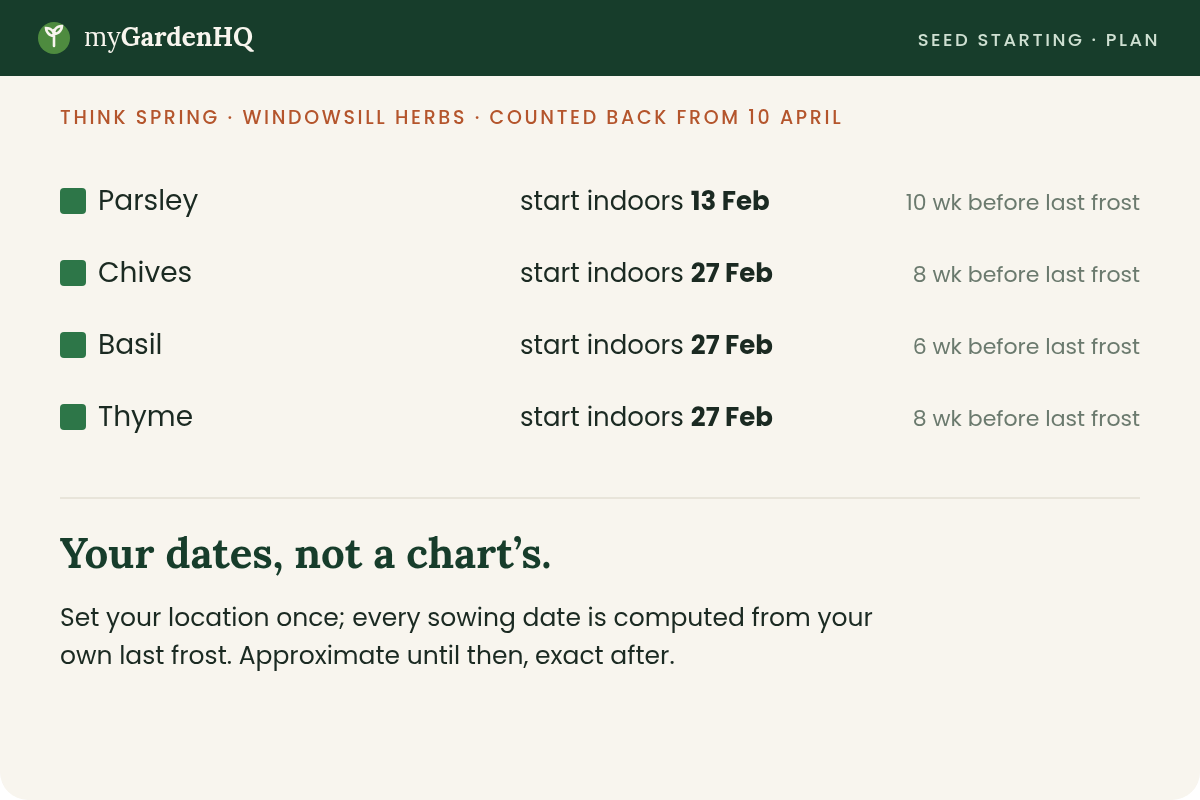

Sow in February for the windowsill. This year's stuffing herbs come from transplants.
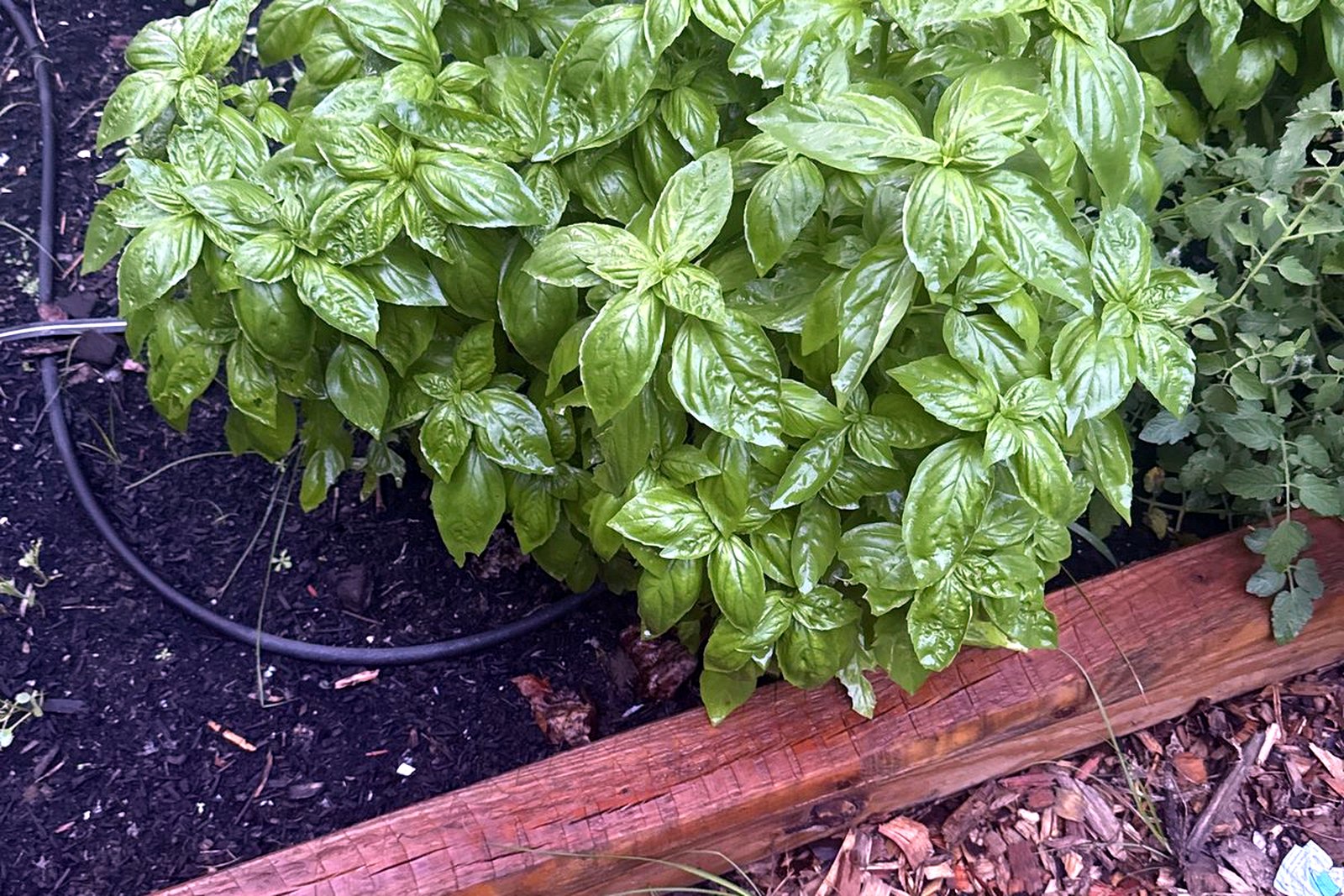
Culinary herb seed pack — for the spring windowsill
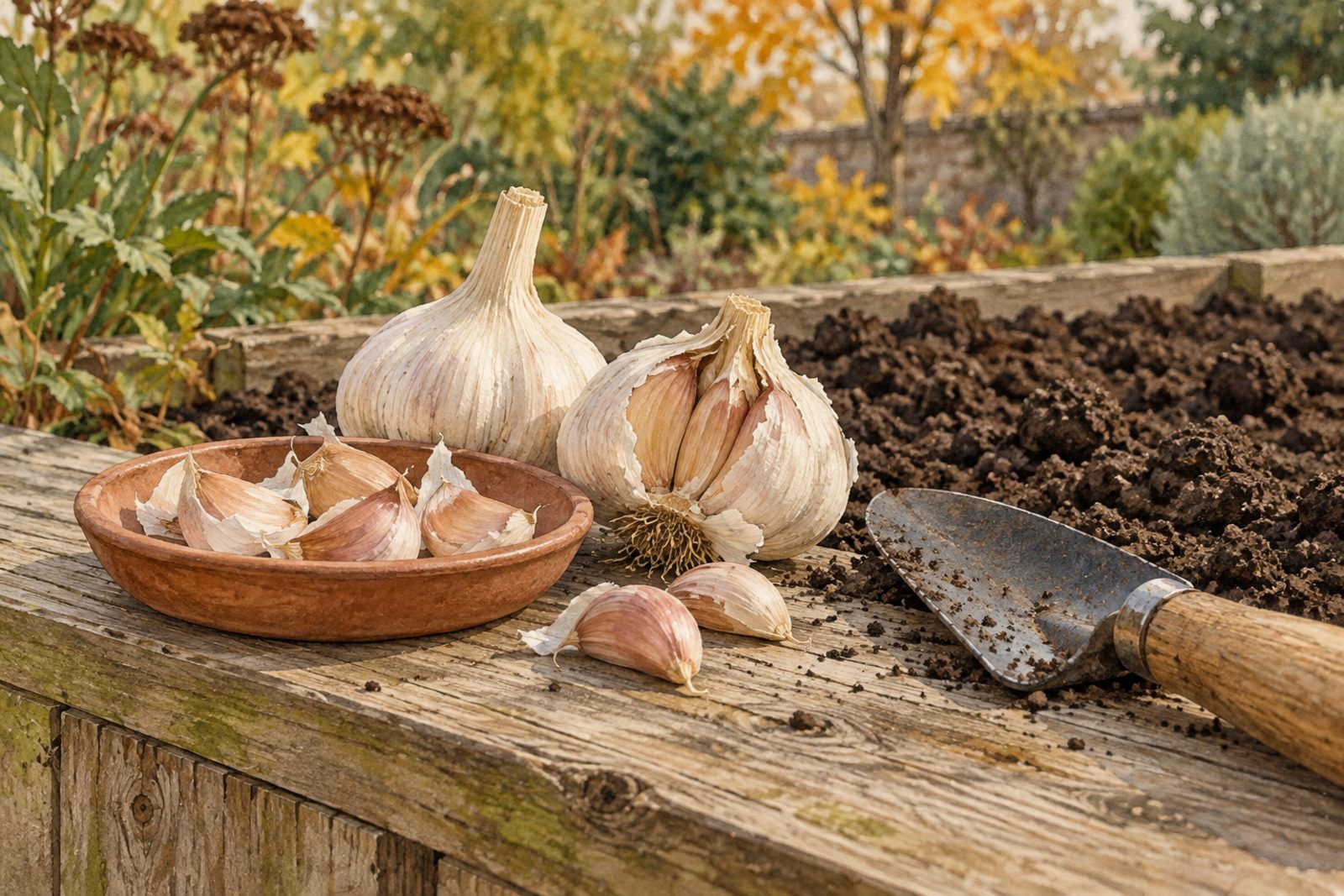
Plant garlic now, harvest next July
October to November is the planting window for garlic in most zones. In zone 7, choose hardneck varieties — they survive the cold reliably and produce scapes in late spring.
Plant individual cloves 2 inches deep, 6 inches apart, pointed end up. Mulch heavily with straw or leaves after the ground freezes.
FROM MY GARDEN
WHAT THE APP DOES WITH IT
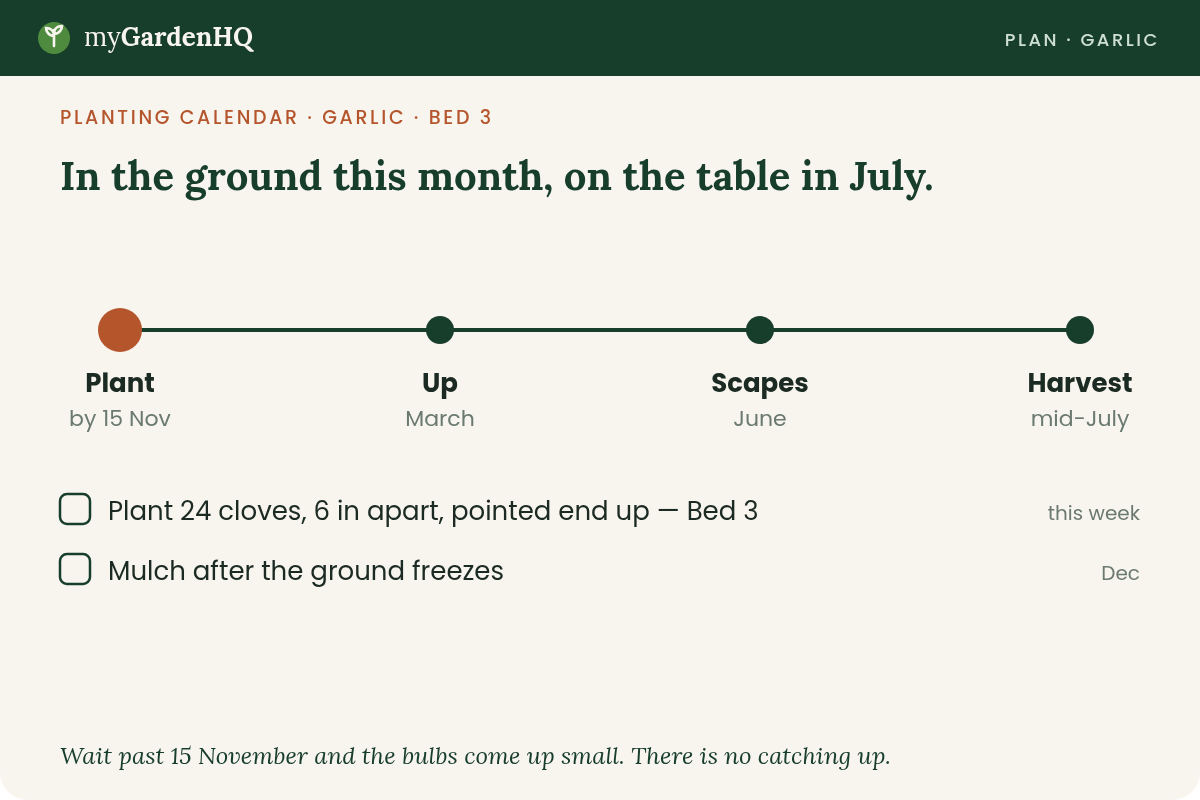

In the ground this month, on the table in July.
Garlic bulbs for planting
The 20-minute job that pays you back in May
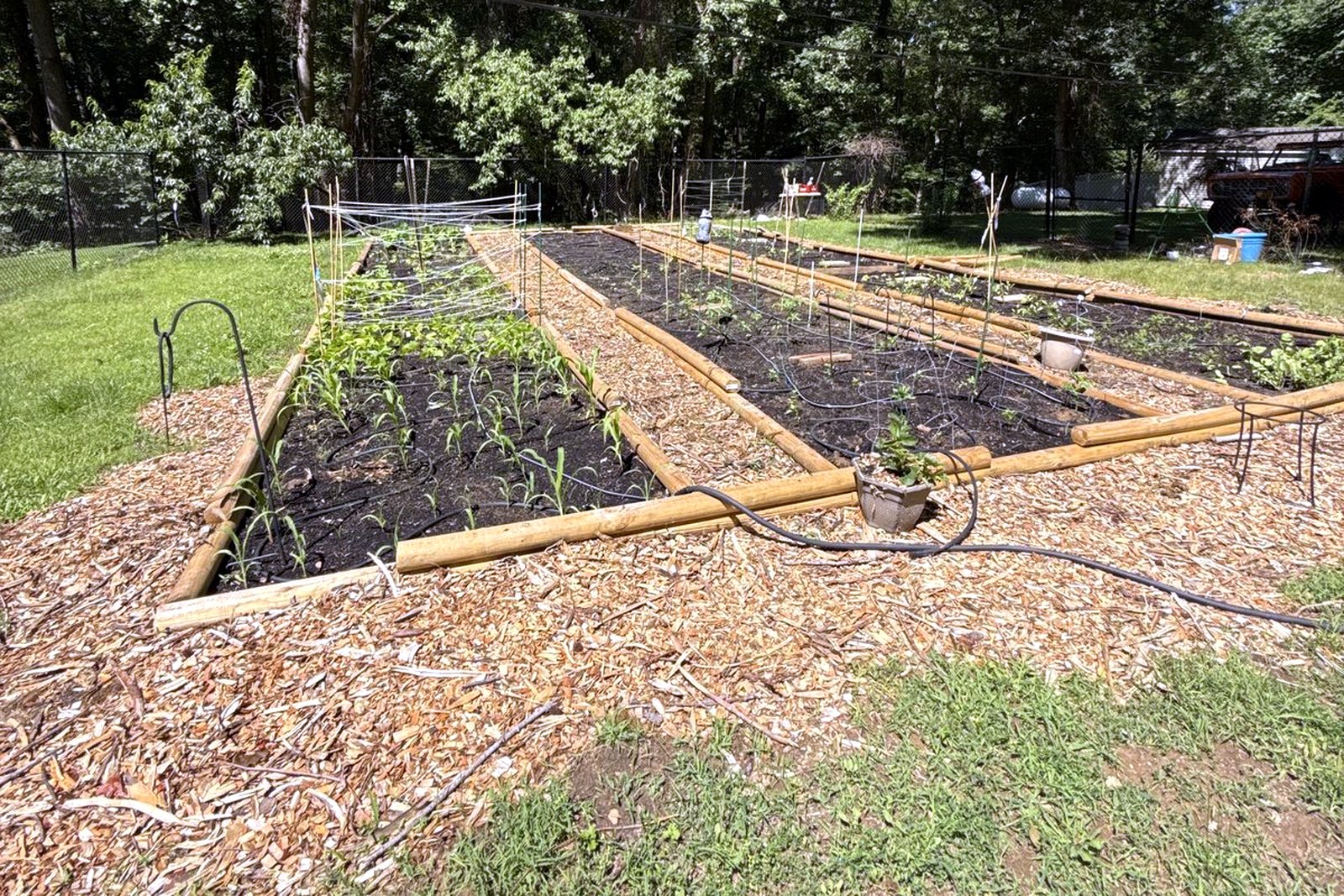
White Dutch clover is the simplest fall cover crop for a home bed. Sow it over any empty soil by mid-October and it holds the ground all winter, fixes nitrogen, and is turned under in spring. Let the soil rest two weeks after turning before planting.
Cereal rye and crimson clover are other options if you want deeper roots or more biomass for a larger plot.
FROM MY GARDEN
WHAT THE APP DOES WITH IT
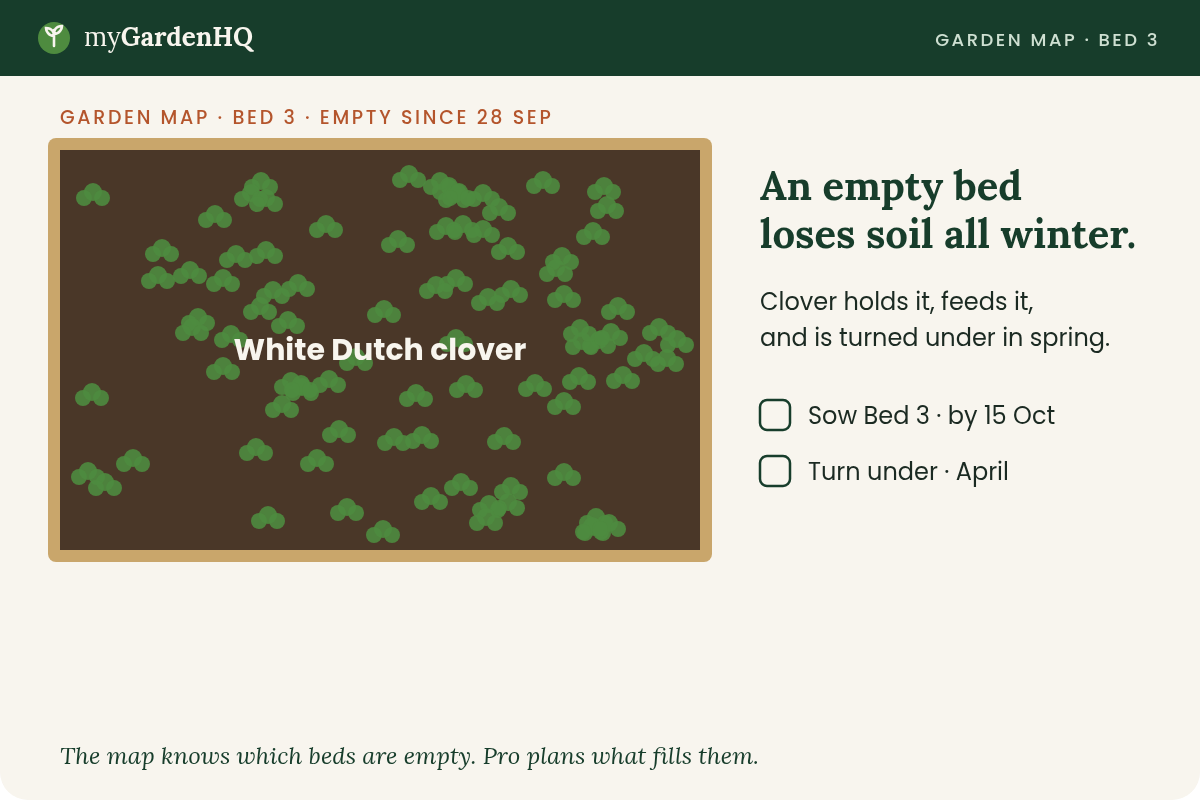

A bare bed loses soil all winter. Clover holds it and feeds it.
White Dutch clover, cover crop
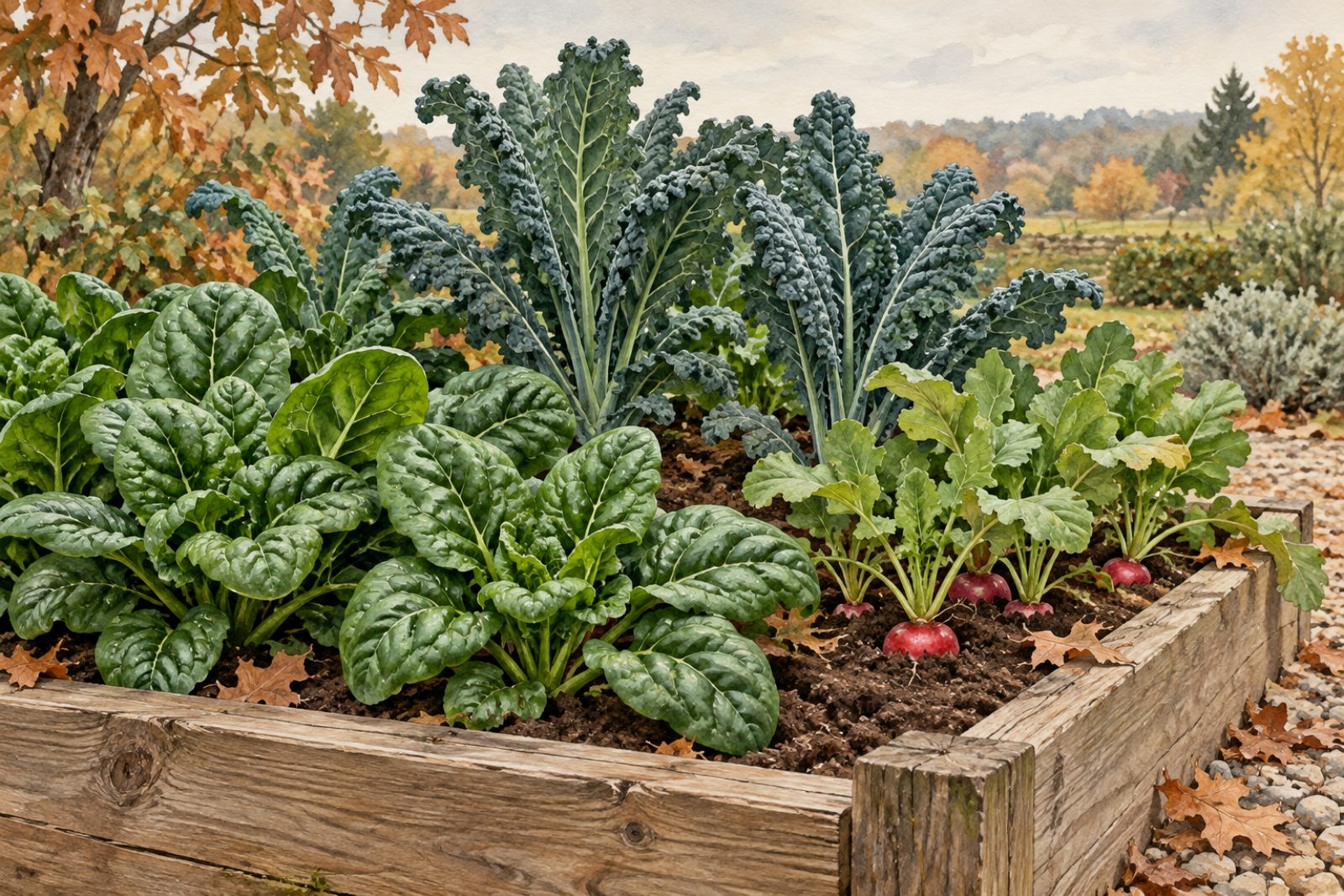
Spinach sown in October feeds you in March
Spinach sown in October overwinters under a row cover and feeds you in March when the garden is otherwise bare.
The key is short days: once day length drops below 10 hours, spinach barely grows, so get it in the ground before then. In zone 7, a single layer of medium-weight cover is usually enough; in colder zones, add a second layer or use heavy weight.
Row cover: how many degrees you actually buy
Row covers come in three weights. Lightweight (0.5 oz/yd²) lets in the most light and protects the lightest frost — about 2°F of protection. Medium weight (1.5 oz/yd²) trades some light for about 4–6°F of protection. Heavy weight (2+ oz/yd²) blocks the most light but buys about 6–8°F on the coldest nights.
Match the weight to your coldest expected night, not your average.
The five-step fall bed reset
- Pull spent crops and compost the healthy ones.
- Test your soil — fall is the best time to amend.
- Add compost and amendments per your test.
- Mulch bare beds with leaves or straw.
- Plant the cover crop before mid-October.
FROM MY GARDEN
WHAT THE APP DOES WITH IT
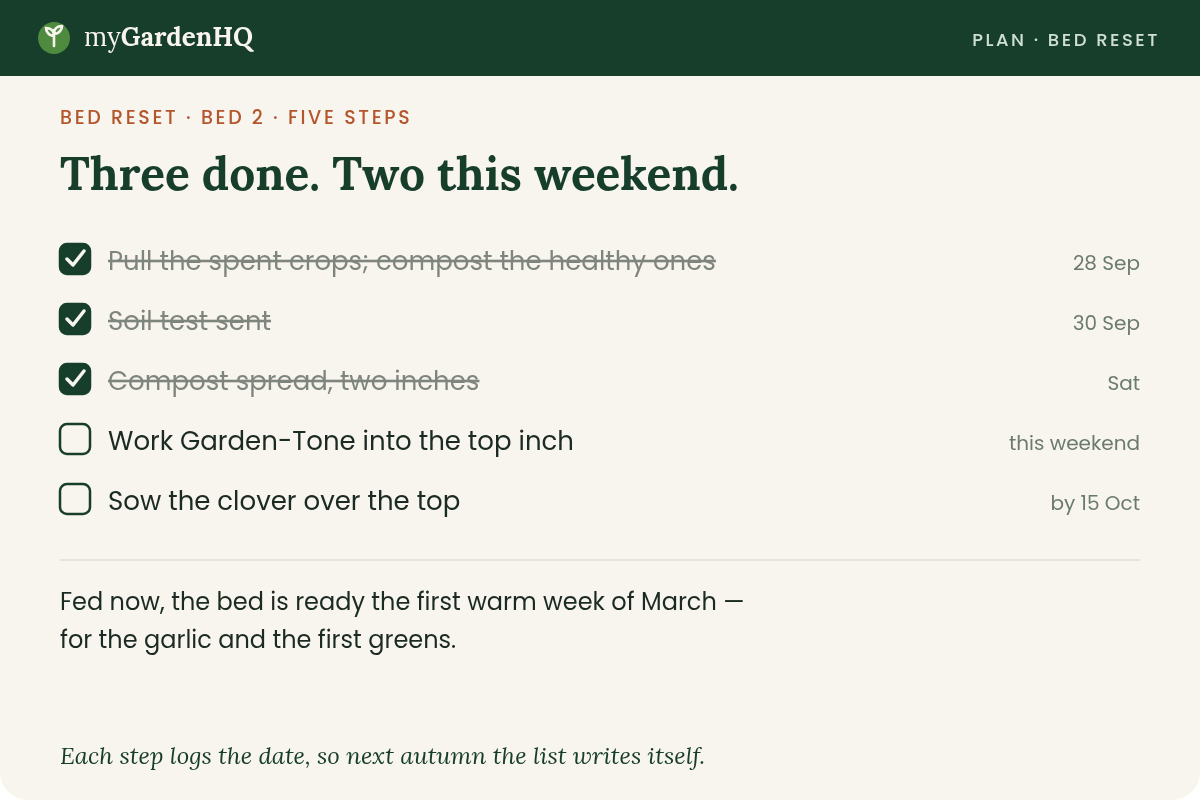

Worked into the top inch now, it is there for the garlic and the spring greens.
Espoma Garden-Tone 3-4-4, 4 lb
What gives you one more month, then stops
Lettuce under a low tunnel keeps going into November and then calls it a year. Chard usually survives with cover and comes back in spring; count it as a bonus. Peppers, basil and tomatoes end at the first frost; pick them the day before.
Your first frost date is a probability, not a date
A frost date isn't one day — it's a range. The 50% date means there's a 50% chance frost arrives by then, and a 50% chance it comes earlier. Pro shows all nine levels so you can plan for the early or late edge of the window.
NOAA publishes nine probability levels for first frost — 10%, 20%, 30%, 40%, 50%, 60%, 70%, 80%, and 90%. Each level has its own date.
Your 50% first-frost date
A zone gives an approximate date. Your ZIP code gives NOAA station-based probabilities.
Pro: all nine probability dates for your ZIP code
Plan for the conservative or optimistic edge of the window — not just the middle.
Frost probabilities are derived from NOAA 1991–2020 U.S. Climate Normals. How to read them (UMD Extension).
Sources: USDA Plant Hardiness Zone Map · UMD Extension, frost dates · UMD Extension, seed saving